

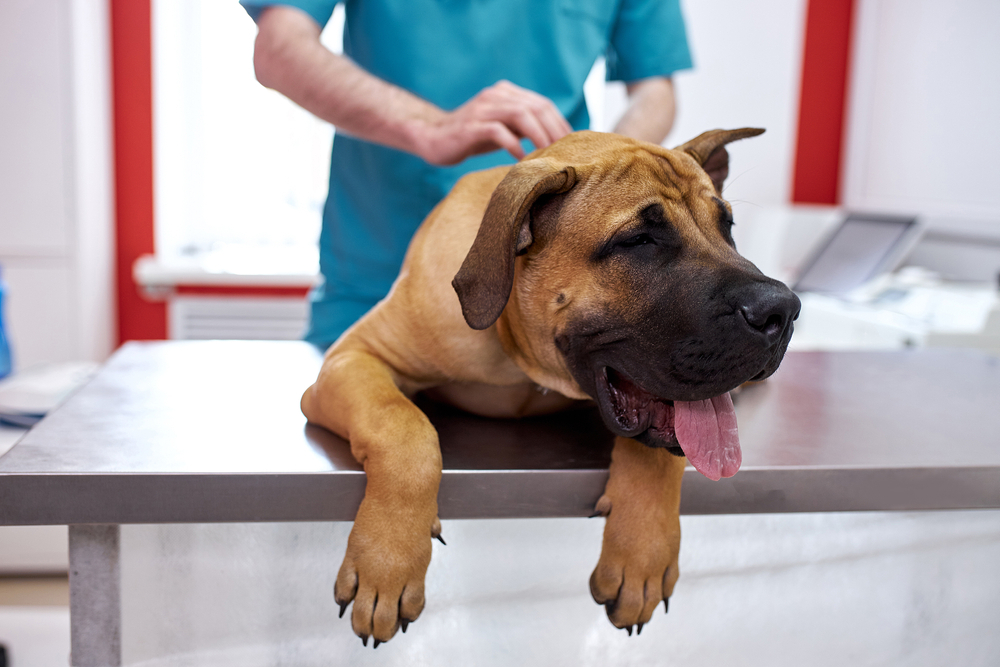
When Neck Problems Need Referral: Wobblers and Cervical Disc Disease
Perhaps you have noticed your dog staggering a little after getting up from a nap, or maybe they are holding their head lower than usual and showing no interest in their favorite tennis ball. Those subtle changes in the way your dog walks or carries themselves can raise a lot of questions, and it is completely understandable to feel worried about what it means for their comfort and mobility going forward. Conditions like Wobblers Syndrome and Cervical Disc Disease involve the neck and spine, and they can affect how your dog moves in ways that range from barely noticeable to genuinely alarming. The good news is that there are real answers and real treatment paths available, and you do not have to navigate them alone.
When something seems off with your dog’s neck or spine, getting an accurate diagnosis quickly is one of the most important things you can do. As Northern Arizona’s emergency veterinary practice, we are here to bridge that gap between the moment you notice something is wrong and the moment your pet is in the right hands for the care they need. With advanced diagnostics, including Northern Arizona’s only CT scanner, we can pinpoint what is going on, manage your dog’s pain, stabilize their condition, and help you understand exactly what the next steps look like. To get started, contact us for guidance or to schedule an appointment.
What Are Cervical Spine Problems in Dogs?
Cervical spine conditions sound intimidating, but many are manageable with the right plan. The fastest way to protect your pet’s mobility is to recognize changes early and get an expert evaluation before things progress.
Dogs with neck pain, weakness, or a wobbly walk may be experiencing neck pain or disc problems, and two of the most common culprits are Wobblers Syndrome and cervical intervertebral disc disease. Both involve compression of the spinal cord in the neck, and both benefit enormously from early diagnosis. The sooner we know what we are dealing with, the sooner we can get your pet comfortable and connect you with the right specialist if advanced treatment is needed.
Our team performs focused neurological assessments, uses advanced imaging to identify the problem, and coordinates specialty referrals when surgery or ongoing neurological care is the best path forward. If you are worried about sudden or worsening symptoms, please contact us so we can guide you through what to do next.
What Is Wobblers Syndrome in Dogs?
Wobblers Syndrome, also called cervical spondylomyelopathy, is a condition where structures in the neck compress the spinal cord and cause weakness and an unsteady gait. You might notice your dog walking with a wider stance than usual, knuckling their paws, or scuffing their nails on the ground. It can look like they are having trouble figuring out where their feet are.
Large and giant breeds are most commonly affected, especially Doberman Pinschers and Great Danes, though any dog can develop wobblers syndrome. There are two main forms:
- Disc-associated wobblers tends to show up in middle-aged dogs as the discs in the neck degenerate over time.
- The other form involves vertebral malformations and is more common in younger dogs whose neck bones develop abnormally. The onset can be gradual, with a slow decline over weeks or months, or it can seem to worsen suddenly after a burst of activity.
We evaluate neurologic signs step by step, localize the problem area through examination and imaging, and determine whether specialized referral is the right call. When signs point toward wobblers, our veterinarians coordinate quickly with neurology teams and take care of your dog’s immediate comfort while the bigger plan comes together.
How Is Cervical Disc Disease Different from Back Disc Problems?
Intervertebral disc disease happens when the cushion between vertebrae bulges or ruptures and presses on the spinal cord. When it occurs in the neck, it tends to cause more intense pain and can have a bigger impact on overall movement than disc problems in the back. That is because the neck controls nerve pathways to both the front and hind legs, so compression in this area can create whole-body effects.
With intervertebral disc disease, some breeds carry a higher risk, including Dachshunds, French Bulldogs, Beagles, and Cocker Spaniels. Dogs with cervical disc problems often show significant neck pain, hold their head in a stiff or lowered position, and become reluctant to turn, look up, or play. Some cases come on suddenly after a jump or twist, while others build slowly over weeks or months with gradually increasing weakness.
Our emergency clinicians combine thorough neurological exams with CT imaging to evaluate the extent of the problem and determine whether medical management or a surgical referral will give your pet the best chance at recovery.
What Symptoms Should You Watch For?
If you notice sudden changes in your dog’s movement or comfort, the safest choice is to have them evaluated promptly. When it comes to spinal cord issues, fast action protects function.
Common signs of cervical spinal problems include:
- Neck pain, crying out, or guarding the head
- Reluctance to turn the head, look up, eat from a bowl on the floor, or play
- An unsteady or wobbly gait, especially in the hind legs
- Scuffing toes or crossing legs while walking
- Weakness, difficulty rising, or collapsing
- Sudden inability to walk or rapid worsening of any of the above
Any sudden neurological change should be treated as urgent. Our emergency team is available 24 hours a day to assess your pet’s pain, breathing, and neurologic status, and to stabilize them if needed. If you are unsure whether your dog’s symptoms warrant an emergency visit, contact us and we will help you figure it out.
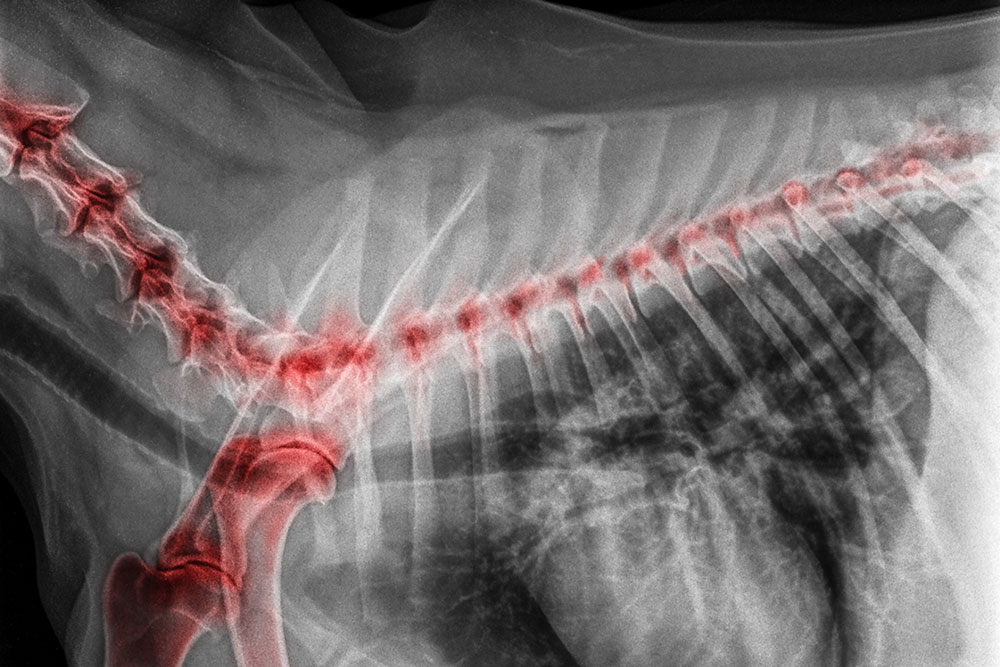
How Do We Diagnose Cervical Spinal Conditions?
Getting a clear diagnosis starts with a thorough neurological exam to figure out exactly where in the spinal cord the problem is occurring. From there, advanced imaging confirms the cause and helps guide the treatment plan.
CT and MRI provide detailed views of bones, discs, and the spinal cord that are far superior to routine X-rays for compression problems. CT is especially useful for identifying bony changes like those seen in wobblers, while MRI excels at showing soft tissue details like disc material and the spinal cord itself.
Our hospital houses Northern Arizona’s only CT scanner, which means we can get high-quality diagnostic images right here without the delay of transferring your pet to another facility. We handle sedation and pain control safely, walk you through the findings in plain language, and help you understand what the images mean for your dog’s care. When MRI is needed for a more complete picture, we coordinate access through trusted specialty partners and make that process as smooth as possible for you and your pet.
Could It Be Something Else?
Not all wobbly walking or weakness is caused by disc disease or wobblers, and that is actually an important reason to get imaging done. Accurate diagnosis matters because treatments can differ quite a bit depending on the cause.
Sudden spinal cord injury from a fibrocartilaginous embolism can appear out of nowhere after play and may be surprisingly painless. In cats, various neuromuscular disorders can produce weakness or gait changes that look a lot like spinal problems but require a completely different approach. Infections, inflammation, and trauma can also produce similar signs.
Our clinicians build a list of possible causes, rule out emergencies that need immediate treatment, and consult specialists when the signs are complex or point to something unusual. This careful, step-by-step approach helps protect your pet’s time, comfort, and outcome.
What Can We Do to Help Your Dog Right Now?
This is where our role as your pet’s emergency and urgent care team really comes into focus. While we do not perform spinal surgeries in-house, what we do provide is the critical foundation that makes everything else possible: accurate diagnosis, immediate stabilization, effective pain control, and clear guidance on next steps.
Here is what that looks like in practice:
Stabilization and pain management. When a dog arrives with neck pain or neurological symptoms, our first priority is getting them comfortable and safe. That means effective pain relief, anti-inflammatory medications to reduce swelling around the spinal cord, and careful monitoring to make sure symptoms are not progressing.
Advanced imaging with CT. With a CT scanner on-site, we can get detailed images of your dog’s cervical spine without the delay of a transfer. This is often the key piece of the puzzle that tells us exactly what we are dealing with and whether surgery is needed.
Clear communication. We know this can be a stressful and confusing time. Our team walks you through the diagnosis, explains what the imaging shows, and lays out your options in straightforward terms so you can make informed decisions about your pet’s care.
Coordinated specialist referrals. When advanced surgery or ongoing neurological care is the best path, we connect you with trusted neurology and surgical teams and make sure all of the diagnostic information transfers seamlessly. We also help you navigate the logistics and timing so the transition feels manageable rather than overwhelming.
If your dog is in pain or showing neurological changes, contact us right away. The sooner we can evaluate and stabilize, the better the outcome tends to be.
Why Does Strict Rest Matter for Spinal Cord Injuries?
For many cervical injuries and disc problems, strict rest is a critical part of the healing process, whether your dog is being managed conservatively or waiting for a surgical consultation. Limiting movement reduces pain and helps prevent further damage to the spinal cord.
Cage rest for spinal cord injury typically involves:
- A crate just large enough for your dog to stand, turn around, and lie down comfortably
- Leash-only bathroom breaks on a steady, level surface
- No stairs, jumping, ball play, or roughhousing
- Soft bedding and good traction to prevent slips
We know that crate rest can be tough on both pets and their families, especially for active dogs who are used to being on the go. Our team helps you set up your home for success, provides tips for easing your dog’s anxiety during confinement, and adjusts medications and strategies if pain control or restlessness become issues along the way.
What Does Rehabilitation Look Like After Treatment?
Whether your dog’s recovery follows surgery or careful medical management, rehabilitation plays an important role in rebuilding strength, mobility, and confidence. Programs designed for physical rehabilitation for neurological patients may include:
- Controlled, progressive exercises and assisted walking
- Hydrotherapy for low-impact strengthening that is easier on healing joints and tissues
- Targeted therapies like laser treatment to support the healing process
Rehabilitation plans evolve as your pet improves, always protecting the spine while gradually rebuilding function. We coordinate with trusted rehab specialists in the region and help you understand home exercise routines so you can maintain gains safely between appointments.
When Is a Specialist Referral the Right Call?
Specialist referral is recommended when advanced surgical expertise or ongoing neurological management will meaningfully change the outcome for your dog. In many cases, earlier referrals lead to better results and shorter recovery times.
Clear indicators that it is time to see a specialist include:
- Rapidly progressive weakness or an inability to stand
- Loss of pain sensation in the feet
- Failure to improve with appropriate medical management and rest
- Severe pain that is not responding to medication
- Imaging findings that suggest significant spinal cord compression needing surgical intervention
We maintain strong relationships with neurology and surgical teams and handle the coordination so you do not have to. If your dog is showing any of the signs above, contact us and we will get the referral process moving quickly.
What Should You Expect Long Term?
Most dogs with cervical spine conditions can enjoy a good quality of life with appropriate treatment and ongoing attention. Outcomes depend on the severity of the condition, how quickly care began, and how each individual dog responds to treatment.
Long-term management may include:
- Activity adjustments and traction-friendly flooring at home to reduce the risk of slips
- Maintaining a healthy weight to minimize stress on the spine
- Ongoing pain control with periodic veterinary rechecks
- Watching for any return of neck pain, stiffness, or gait changes
Many pets do well with consistent routines and timely adjustments if symptoms come back.
You Have a Partner in This
Neck and gait changes can be scary to watch, but timely care makes a real difference. With accurate diagnostics, effective pain management, and the right specialist team involved, there are strong paths forward for most cervical spine conditions.
If your pet shows new weakness, sudden pain, episodes that look like seizures, or if neck problems follow an accident or trauma, please contact us right away. Our team is here around the clock to assess what is happening, keep your dog comfortable, and help you understand every step of what comes next. You do not have to figure this out on your own.


Leave A Comment