

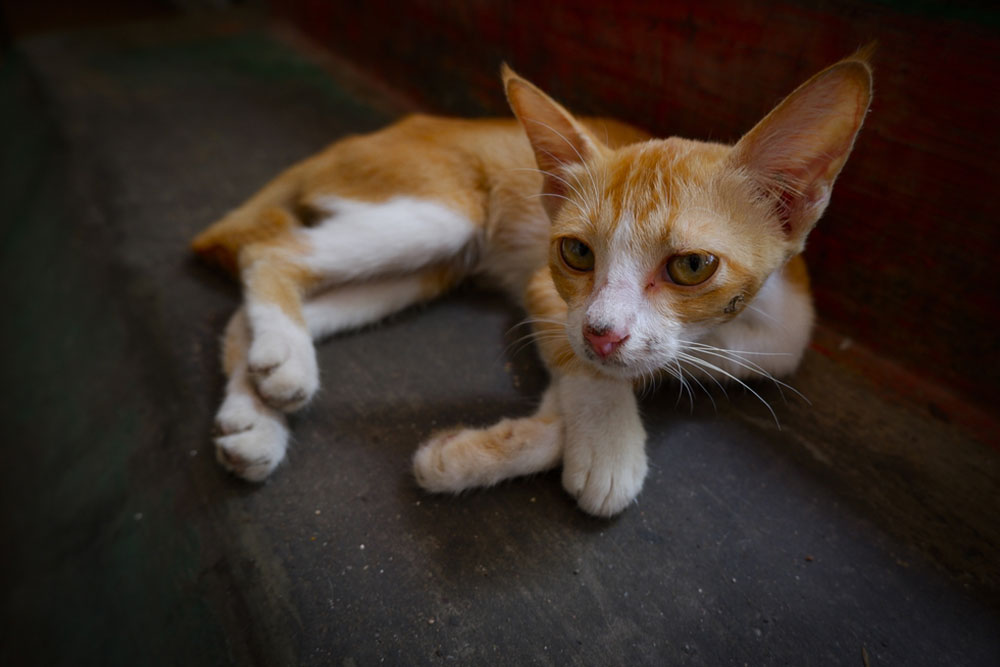
A dog or cat who suddenly cannot stand or walk normally usually has a breakdown somewhere along the chain that moves the body: the nerves, the muscles, the junction where the two meet, or something in the bloodstream, like low potassium or low blood sugar, that keeps the chain from firing. The possible causes are many, from tick paralysis and rattlesnake bites to spinal cord disease, myasthenia gravis (a disorder that blocks the signal between nerve and muscle), and electrolyte crashes tied to organ trouble. None can be told apart at home, and a few progress within hours to weaken the muscles that control breathing. Testing separates a treatable cause from a dangerous one, and the sooner the workup starts, the more options stay on the table.
Veterinary Emergency and Specialty Center of Northern Arizona treats sudden weakness and collapse in dogs and cats from Flagstaff and across the region, all weekend long, when your regular vet is closed. Our in-house lab picks up the electrolyte and blood sugar disturbances that masquerade as nerve disease, and our CT scanner gives a close look at the spine and skull when the exam points to a structural problem. If your pet went from walking to wobbling in hours, bring them in so the workup can start.
Sudden Weakness: What Matters in the First Hours
- Neuromuscular weakness means a failure somewhere along the pathway from the brain and spinal cord out to the nerves, the nerve-to-muscle junction, and the muscles, so it shows up as collapse or weakness.
- Causes range from spinal disc disease and tick paralysis to myasthenia gravis, low blood sugar, and Addison’s disease, and several look identical until testing tells them apart.
- A few causes can climb fast enough to weaken the muscles that control breathing, so sudden or rapidly worsening weakness is an emergency, not a wait-and-see situation.
- Bloodwork, imaging, and a careful neurological exam narrow a long differential list quickly, and an early diagnosis keeps the most treatment options open.
What Does Neuromuscular Weakness Actually Mean?
Neuromuscular weakness means the system that moves the body has broken down somewhere along its wiring, from the brain and spinal cord out through the peripheral nerves, across the junction where nerve meets muscle, and into the muscle fibers. When any link in that chain fails, the muscles can’t fire properly, and your pet loses strength.
True weakness looks different from an orthopedic problem. A dog with a torn knee ligament or an arthritic hip limps, shifts weight off the painful leg, and still wants to move. A neurological problem disrupts the signal itself: your pet can’t rise, knuckles over on the paws, sways, or sinks in the back end after a few steps. Pain makes a pet reluctant to move; weakness takes away the ability, and sorting out which one you’re seeing is the first job of the exam.
What Are the Warning Signs of Neuromuscular Weakness at Home?
The signs group into four areas: movement, stamina, the face and throat, and the whole body. Any of them is worth a same-day exam, and any that appear suddenly or worsen by the hour mean your pet should be seen immediately, whether that’s your regular vet on a weekday or our emergency service on a weekend.
- Movement: Dragging or knuckling of the back paws, buckling in the hind end, a wobbly or swaying gait, or an inability to rise.
- Stamina: Getting winded or collapsing after short activity, needing to lie down mid-walk, or weakness that builds the longer your pet moves.
- Face and throat: Regurgitation of undigested food, gagging or trouble swallowing, drooping facial muscles, or a hoarse or changed voice.
- Whole-body: Trembling, muscle twitching, generalized wobbliness, or a pet who suddenly can’t support their own weight.
What you notice at home shapes the whole workup, so note the pattern before you come in. When did it start, and how fast is it changing? Weakness that came on over an hour is a different problem from weakness that crept in over weeks. Does it worsen with activity and ease after rest, or hold steady? A short phone video of your pet trying to walk helps, because these signs come and go. Sudden collapse that doesn’t resolve in a minute or two, weakness climbing up the body, or any struggle to breathe means come in right away.

What Causes Neuromuscular Weakness in Dogs?
The causes fall into four broad groups: spinal cord problems, disorders of the nerve-to-muscle junction and the muscles, diseases of the peripheral nerves, and metabolic or systemic upsets in the bloodstream. Which group is behind the weakness shapes both treatment and outlook. A hard fall or a car strike can also injure the spine directly, and traumatic spinal injuries need imaging fast.
Spinal Cord Conditions
The spinal cord carries movement signals to the legs, so anything pressing on it or cutting off its blood supply shows up as weakness. Intervertebral disc disease is a bulging or ruptured disc pressing on the cord. Wobbler syndrome compresses the cord in the neck and produces an unsteady, swaying gait. A fibrocartilaginous embolism strikes suddenly when disc material blocks blood flow to the cord, often leaving one side weak with little pain. Spinal tumors and fractures round out the group, and imaging the spine early improves the odds.
Neuromuscular Junction and Muscle Disorders
This group targets the hand-off between nerve and muscle, or the muscle itself, and the classic clue is weakness that fluctuates. Myasthenia gravis disrupts the chemical signal between nerve and muscle, so a dog starts a walk normally, buckles as the muscles tire, then recovers with rest. It often travels with megaesophagus, an enlarged, weakened esophagus that causes regurgitation of undigested food. Botulism, from spoiled food or a carcass, causes a spreading paralysis, and tick paralysis comes from a toxin in an attached tick’s saliva that eases once the tick is removed. Exercise-induced collapse sends an otherwise healthy dog wobbling in the hind legs after hard activity, while inflammatory muscle disease attacks the fibers directly and causes generalized weakness, sometimes with a stiff, sore gait.
Peripheral Nerve Conditions
When the peripheral nerves are damaged, weakness builds in a pattern and reflexes fade. Acute polyradiculoneuritis inflames the nerve roots and drives weakness that climbs from the hind legs forward over days, usually recovering with weeks of nursing care as the nerves heal. A brachial plexus injury, where trauma stretches the nerves running into a front leg, leaves that limb weak, numb, and eventually wasted. A rattlesnake bite can produce sudden weakness alongside swelling and pain, and rattlesnake season in Northern Arizona runs long, roughly spring through fall.
Metabolic and Systemic Causes
Some of the most treatable causes never touch the nervous system; they live in the bloodstream and imitate nerve disease. Addison’s disease starves the body of the adrenal hormones that balance electrolytes, and it can look just like a primary nerve problem. Low blood sugar, out-of-range potassium, and dehydration from vomiting and diarrhea can all drop a pet to the floor while the nerves and muscles are structurally fine. So can toxins and poisonings, from antifreeze to certain human medications, which is one more reason the history you give us matters. Bloodwork comes early for exactly this reason, and it’s also the good news: several of these causes reverse quickly once corrected.
How Does Neuromuscular Weakness Look Different in Cats?
Cats develop many of the same conditions as dogs but tend to hide it, so the signs are quieter: less jumping, reluctance to climb, or simply moving less. A cat rarely staggers dramatically across the room; the change often reads as a personality shift, easy to miss until the weakness is well along.
A few feline patterns stand out:
- A cat who suddenly can’t use their back legs and cries in pain can signal a blood clot at the back of the aorta, often tied to heart disease rather than a nerve problem.
- Low potassium from kidney disease commonly drives a neck-drooping, floppy weakness.
- Diabetes can cause a neuropathy that changes how they use their back legs, called a “plantigrade stance”.
How Do Vets Test for Neuromuscular Weakness?
Testing moves in steps, from a hands-on neurological exam and history to bloodwork to imaging and specialized tests. Each step narrows the list, each test is chosen because it can change the plan, and we walk you through the reasoning at every stage, because understanding the deeper issue behind your pet’s emergency is part of the treatment.
The Neurological Exam and History
Our veterinary team watches the gait, tests reflexes, checks muscle tone and side-to-side symmetry, and runs through the cranial nerves. Pressing along the spine helps localize the problem, since the neck behaves differently from the lower spine or a single nerve. Your history does half the work, which is why your timeline and phone video matter.
Advanced Imaging and Laboratory Testing
Once the exam localizes the problem, testing gets targeted. Bloodwork and urinalysis screen for the metabolic causes, and running them here means a low blood sugar or an electrolyte crash surfaces quickly. When the exam points to a structural problem, imaging is next, and our CT scanner gives a detailed cross-sectional look at bone and disc.
| Test | What it looks at | Best for |
| Bloodwork and urinalysis | Blood chemistry, electrolytes, organ function | Metabolic causes: Addison’s, low blood sugar, potassium |
| Spinal radiographs | Bones of the spine | Fractures, obvious disc space changes, bone tumors |
| CT | Cross-sections of bone and disc | Spinal compression, skull and structural problems |
| MRI and myelography | Soft tissue and the cord itself | Detailed spinal cord and disc detail |
| Acetylcholine receptor antibody test | Nerve-to-muscle junction | Confirming myasthenia gravis |
| EMG and nerve conduction | Electrical activity in nerve and muscle | Pinpointing nerve and muscle disease |
MRI, nerve conduction studies, and muscle or nerve biopsies are specialized tests, and when one is the right next step, we coordinate the referral so nothing stalls.
Certain causes call for a targeted test rather than broad imaging. Inherited conditions such as muscular dystrophy can often be confirmed with breed-specific genetic tests. When tick paralysis is on the table, a meticulous search of the coat and removal of the tick is both test and treatment, and toxin screening comes in when the history suggests exposure.
How Is Neuromuscular Weakness Treated?
Treatment follows the diagnosis, so there’s no single protocol: an immune-mediated disease, a compressed disc, a tick, and an electrolyte crash each call for a different plan. Once we know the cause, we map out an approach with you, then watch closely to see how your pet responds.
What Is the Long-Term Outlook for a Pet With Neuromuscular Weakness?
The prognosis swings widely with the cause, the severity, and how quickly treatment starts. Some causes carry an excellent outlook: tick paralysis, many electrolyte problems, and Addison’s disease often resolve or become very manageable once treatment is underway. Others ask for lifelong management and patience.
Immune-mediated diseases like myasthenia gravis can go into remission but often need ongoing medication and monitoring. A dog recovering from disc surgery or polyradiculoneuritis may need weeks to months of restricted activity and rehab before regaining function, and some keep a mild deficit for good. Two things move the odds across nearly every diagnosis: catching it early and staying consistent with the care plan and recheck visits. Even when a condition needs lifelong attention, most of these pets live full, comfortable lives with the right support.
Frequently Asked Questions About Neuromuscular Weakness
Is sudden weakness in my dog or cat always an emergency?
Treat sudden weakness as an emergency until a professional says otherwise. A handful of causes, including tick paralysis, botulism, and ascending nerve inflammation, can climb up the body over hours and reach the muscles that control breathing. Others, like low blood sugar or an Addison’s crisis, drop a pet fast but reverse quickly with treatment. Because you can’t tell a dangerous cause from a manageable one at home, the safe move is to be seen right away.
Can neuromuscular weakness be cured, or is it lifelong?
It depends entirely on the cause. Tick paralysis, electrolyte crashes, and Addison’s disease are cured or well controlled once treatment starts, and some spinal injuries recover well after surgery and rehab. Others, like myasthenia gravis or certain inherited muscle diseases, are managed rather than cured, meaning ongoing medication and monitoring.
How can I tell weakness apart from my pet just being in pain?
Pain and weakness can look similar, but a few clues separate them. A painful pet still wants to move and favors one leg or yelps when a spot is touched, while a weak pet can’t generate the movement no matter how motivated they are. Weakness often affects more than one limb and can come with regurgitation, a changed voice, or collapse after exercise. The useful question to bring us is whether your pet seems unwilling to move or unable to.
Getting Your Pet the Answers They Need
Watching a strong, active dog or cat suddenly lose the ability to stand is frightening, and the not-knowing is often the hardest part. Many causes are treatable or manageable once we know what we’re dealing with, and a careful workup is how we get there.
If your pet is weak, collapsing, or moving in a way that worries you, don’t wait it out. We provide emergency and critical care on weekends, from Friday evening through Monday morning, for exactly the hours when your regular vet is closed. Reach out to Veterinary Emergency and Specialty Center of Northern Arizona in Flagstaff and let’s start finding answers together.





Leave A Comment