

Bone Cancer in Dogs: Understanding Osteosarcoma and Treatment Options
Finding out your dog has bone cancer is devastating. The word “osteosarcoma” sounds scary, and suddenly you’re facing decisions about amputation, chemotherapy, and prognosis while your heart is breaking. If you’re reading this, you’re probably looking for answers during one of the hardest times in your life as a pet owner. We want you to know that you’re not alone, and that there are real options that can help your dog feel better and give you more quality time together.
Osteosarcoma often announces itself through limping that gets worse instead of better, swelling that appears suddenly over a leg bone, and pain that intensifies until your dog can barely put weight on the limb. This cancer does spread aggressively, and the timeline can feel impossibly short. But understanding your options, whether that’s aggressive treatment or comfort-focused care, helps you make the best decision for your dog and your family.
The Veterinary Emergency and Specialty Center of Northern Arizona provides both emergency stabilization and ongoing care for osteosarcoma patients. When dogs come in with sudden lameness or pathological fractures from tumor-weakened bones, our emergency team manages pain and provides immediate diagnostics. We stage the disease, discuss treatment options honestly, and connect families with oncology specialists when chemotherapy is pursued. Contact our team to discuss osteosarcoma diagnosis, staging, and treatment planning. We’re here to help you through this.
What Is Osteosarcoma and How Does It Affect Dogs?
Osteosarcoma is the most common type of bone cancer in dogs, and it’s especially prevalent in large and giant breeds like Great Danes, Rottweilers, Greyhounds, and Irish Wolfhounds. The cancer typically develops in the long bones of the legs, though it can also occur in the skull, spine, or ribs. In rare cases, cats can develop osteosarcoma too.
What makes this cancer so challenging is that it aggressively invades bone tissue from the inside, weakening the structure and causing significant pain. Even more concerning, osteosarcoma in dogs tends to spread to the lungs early and silently. By the time we diagnose the primary tumor, microscopic spread has often already occurred. This is why prompt evaluation matters so much if you notice changes in how your dog moves or behaves.
We know this information is hard to hear. But understanding what you’re dealing with helps you make informed decisions about your dog’s care.
How Can You Tell If It’s More Than Just a Limp?
The earliest symptom of osteosarcoma is usually limping that doesn’t go away with rest. Many pet owners initially think it’s a sprain, arthritis flare, or joint issue. Many pet owners won’t know their pet has cancer until a pathologic fracture has occurred- a break where the cancer has destroyed the bone. Bone cancer pain tends to progress quickly, sometimes worsening noticeably overnight or over just a few days.
Other warning signs to watch for:
- Swelling near a joint or along a leg bone
- Sudden difficulty bearing weight on a limb
- Lethargy or loss of interest in walks and play
- Signs of pain when the area is touched
- A firm mass that seems to have appeared out of nowhere
Unfortunately, these signs of cancer in pets often look like other conditions at first. That’s why we encourage you not to take a “wait and see” approach if your gut is telling you something’s wrong.
Cancer in pets doesn’t always look dramatic. If your dog is reluctant to move, guarding a leg, or showing unexplained pain that isn’t improving, please have them seen right away. Our team has expertise in identifying the difference between common lameness and more serious causes, and we’ll help you get answers quickly. If advanced imaging is needed, our in-house CT scanner ensures no time is wasted.
How Is Bone Cancer Diagnosed?
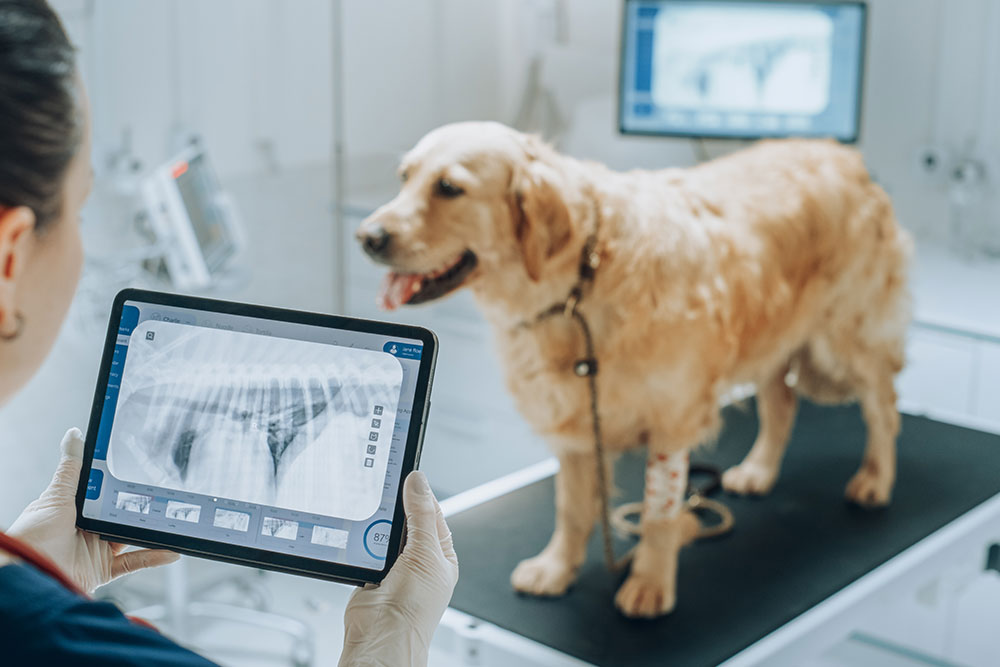
Diagnosing osteosarcoma involves several steps, usually starting with X-rays. If the bone shows a characteristic pattern of aggressive destruction (sometimes described as a “sunburst” appearance), additional testing follows.
CT imaging gives us detailed views of the bone and helps check for lung metastasis, which is unfortunately common with osteosarcoma. To confirm the type of cancer, we may recommend either cytology or biopsy. Cytology uses a needle to collect cells for examination, while a biopsy removes a small tissue sample. These tests help rule out other bone diseases like fungal infections and guide treatment planning.
Staging is the final piece of the puzzle. This includes chest imaging and potentially a full-body scan to determine if and where the cancer has spread. Staging helps us give you realistic information about prognosis and helps you decide whether aggressive treatment or palliative care makes the most sense for your situation.
We’ll walk you through every step of this process and answer all your questions along the way.
When Is Amputation the Right Choice?
We know the word “amputation” sounds scary. It’s one of the hardest things to consider when you love your dog. But here’s something important to understand: for many dogs with osteosarcoma, removing the affected limb is the most effective way to eliminate the primary source of pain and significantly improve quality of life.
Dogs are incredibly resilient. Most adapt to three legs within days to weeks, and many owners are amazed at how quickly their dog is back to playing and enjoying life. Leg amputation removes the painful tumor completely and allows dogs to move without the constant discomfort they were experiencing before surgery.
Amputation alone doesn’t cure osteosarcoma because of the high likelihood that microscopic spread has already occurred. That’s why it’s often combined with chemotherapy to address metastatic disease. While this combination doesn’t cure the cancer, it can significantly extend survival time while maintaining good quality of life.
Our surgery team offers both emergency and planned amputations for pets diagnosed with osteosarcoma. We prioritize mobility, pain control, and emotional support as you navigate this difficult decision. We’ll discuss everything openly with you, with compassion and honesty at the forefront.
What Other Treatment Options Are Available?
Amputation isn’t the only treatment for osteosarcoma. When surgery isn’t possible due to tumor location, or when families choose a different path, other therapies can help control pain and slow disease progression.
Limb Sparing Surgery is a possibility for some pets when the cancer is located further down the front leg, near the wrist or ulna, and there is no metastasis present. This involves removing the tumor and inserting a metal implant and plate with a chemotherapy soaked biodegradable sponge into the affected area. We can discuss whether this is an option for your pet and direct you to the right referral centers.
Chemotherapy is the most established systemic treatment and is typically used after amputation to target microscopic spread. The good news is that chemotherapy for dogs looks very different from chemotherapy in people. Most dogs tolerate it well, with minimal side effects. The goal isn’t to make your dog sick; it’s to extend quality time together. Our team coordinates oncology referrals for chemotherapy while managing all other aspects of your dog’s care in-house.
Radiation therapy can be incredibly helpful for pain control, especially when surgery isn’t an option or when the tumor is in a location that can’t be removed. Radiation facilities may be part of the treatment plan, and we can help connect you with appropriate specialists.
Immunotherapy is an emerging area of cancer treatment that’s showing real promise. Immunotherapy for osteosarcoma works by helping the dog’s own immune system recognize and fight cancer cells. While still being studied and refined, this represents an exciting direction in veterinary oncology.
Palliative care focuses on keeping your dog comfortable without pursuing aggressive treatment. This is a valid, loving choice that many families make, and we support it fully. Pain medications, anti-inflammatory drugs, and supportive care can help maintain quality of life.
We also connect you with pet owner resources to help you understand the full range of treatment paths available both locally and regionally.

How Can You Help Your Dog Live Well After Diagnosis?
Even with a diagnosis like osteosarcoma, your dog’s story isn’t over. Many dogs live several months or longer with good quality of life when they have the right support. Some families pursue aggressive treatment and are rewarded with extra time. Others choose a palliative path focused purely on comfort. Both are valid, loving choices, and we’ll support you unconditionally in either direction.
Here’s what helps dogs thrive after diagnosis:
- Pain management is the foundation of quality of life. We’ll work with you to find the right combination of medications to keep your dog comfortable.
- Mobility support makes a big difference, especially after amputation. Harnesses and slings help dogs navigate stairs, get in and out of cars, and move around while they’re adjusting.
- Regular monitoring through scheduled rechecks helps us catch changes early and adjust the plan as needed.
- Your love and attention matter more than you might realize. Dogs live in the moment, and your presence and care make every day better.
Our team stays closely involved through every phase. We help you adjust medications, schedule rechecks, and make daily life easier for both you and your dog.
We’re Here When You Need Us
If your dog is limping, in pain, or you’re worried about possible bone cancer, please don’t wait. Early evaluation gives you more options and more time to make thoughtful decisions.
The Veterinary Emergency and Specialty Center of Northern Arizona offers immediate, compassionate support. From diagnosis to surgery to ongoing comfort care, our entire team is here for you and your pet. We understand how hard this is, and we’ll be with you every step of the way.
Contact us today for urgent evaluation, oncology coordination, or personalized treatment planning. Every moment matters, and we’re ready when you need us most.



Leave A Comment