

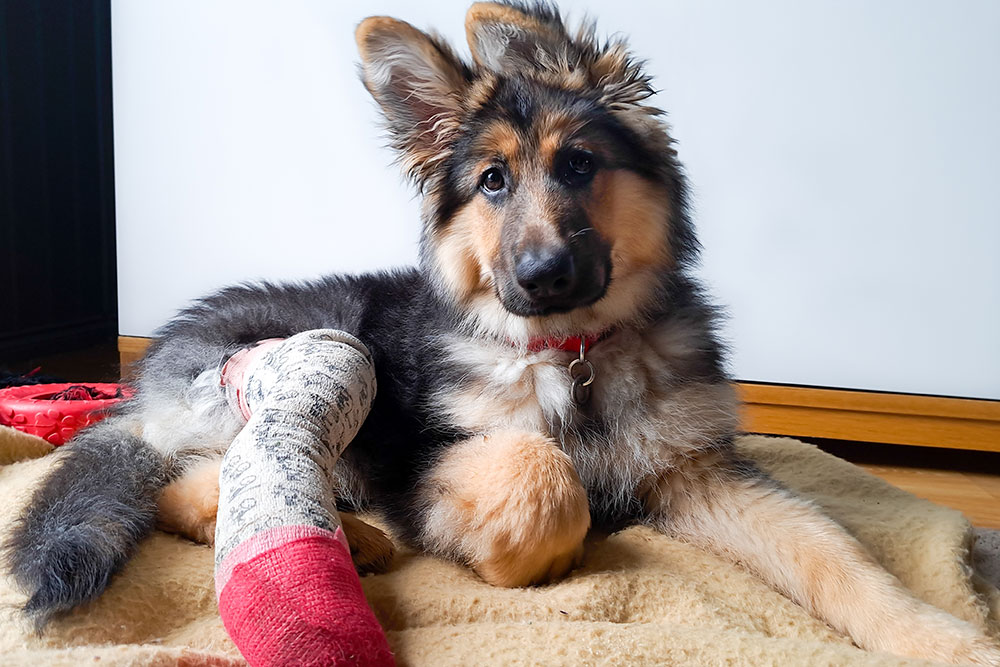
Fractured Limbs in Pets: How Emergency Veterinarians Diagnose and Treat Broken Bones
A broken bone is one of the most painful injuries a pet can experience, and it almost always requires immediate veterinary care. Whether the fracture happened from a fall, a car accident, rough play, or an underlying condition that weakened the bone, the priority is the same: stabilize your pet, manage their pain, and determine exactly where and how badly the bone is broken so the right treatment plan can begin.
Fractures range from simple, clean breaks that may heal with external support to complex, multi-fragment injuries that require surgical repair with pins, plates, or screws. At the Veterinary Emergency and Specialty Center of Northern Arizona, our emergency and specialty teams work together to evaluate fractures quickly using advanced diagnostic imaging, including CT scanning for complex cases, and develop individualized treatment plans based on the type of fracture, your pet’s size and age, and their overall health. If your pet is limping, unable to bear weight, or showing signs of trauma, call us at 928-779-5522 so we can begin assessment right away.
Recognizing a Fracture: What to Watch For
Broken bones in pets produce a recognizable cluster of signs:
- Sudden severe limping or complete non-weight-bearing on a limb
- Visible swelling or abnormal limb shape or angle
- Crying out, vocalizing, or snapping when the affected area is touched
- Reluctance to move or stand
- Hiding, withdrawal, or behavioral changes indicating significant pain
- In severe cases, an open wound at the fracture site (open fracture)
Fractures result from trauma in most cases: vehicle accidents, falls from height, rough handling, or encounters with other animals. In young puppies, growth plate injuries can occur from forces that would not fracture an adult bone. In older pets with bone cancer or metabolic bone disease, fractures can occur with minimal trauma.
If there is any possibility that a pet has fractured a bone, evaluation should happen the same day. Do not allow weight-bearing on a suspected fracture, and transport your pet as smoothly as possible to minimize movement at the fracture site. Call us at 928-779-5522 before leaving so we can prepare for your arrival.
Diagnosis: From Physical Exam to Imaging
Physical examination assesses pain location, range of motion, limb stability, and neurovascular status (circulation and sensation below the fracture). These findings guide where imaging should focus.
Radiographs confirm fracture location, pattern, and severity. The classification of the fracture directs treatment selection:
- Closed vs. open:whether the bone has broken through the skin
- Simple vs. comminuted:whether the fracture is a single clean break or fragmented into multiple pieces
- Stable vs. unstable:whether the fracture fragments hold position with normal joint loading
- Articular vs. non-articular:whether the fracture involves a joint surface
For complex injuries, our CT scanner provides three-dimensional detail of fragment position, joint involvement, and vascular anatomy that two-dimensional radiographs cannot supply. This information directly influences surgical planning, particularly for complex periarticular fractures or cases where the full extent of the injury is not clear from standard views.
External Stabilization: When Splints and Casts Are Appropriate
External stabilization is appropriate for specific fracture types: stable, closed fractures of the radius/ulna or tibia/fibula (below the elbow or knee), certain small dog and cat fractures, and as temporary support pending surgical intervention.
What external stabilization involves:
- Appropriate padding and casting materialapplied over the fracture with the joint above and below immobilized
- Regular rechecks every five to seven daysinitially to adjust fit as swelling changes
- Typical treatment duration:four to eight weeks depending on fracture type and healing progress
Home care during casting:
- Keep the cast dryat all times (use a protective bag during outdoor bathroom trips)
- Check the toesprotruding below the cast daily for swelling, coldness, or discoloration
- Watch for odor,which indicates moisture or skin breakdown inside
- E-collarto prevent chewing at the cast
- Call us immediatelyfor any of the above signs
Cast complications from improper fitting or home management cause significant additional injury. The rechecks are not optional.
Surgical Repair: When Internal or External Fixation Is Needed
Pins, Plates, Screws, and External Fixators
Surgical fracture repair in dogs and surgical fracture repair in cats is recommended for fractures that cannot be reliably stabilized externally: unstable fracture patterns, comminuted fractures with multiple fragments, fractures involving joint surfaces, fractures in the femur or humerus (where casting is not feasible), and open fractures with contamination concerns.
Common fixation methods:
- Intramedullary pins:inserted through the medullary canal of long bones; provides axial stability
- Bone plates and screws:applied to the bone surface; provides rigid stability and alignment for complex patterns
- External skeletal fixators:pins placed through the skin into the bone connected by an external frame; useful for open fractures or where implant infection risk is elevated
- Combination constructs:multiple methods combined for comminuted or complex injuries
Surgical repair provides faster return to function, more precise alignment, and better long-term joint health for fractures that cannot be reliably managed conservatively.
Surgery day at our hospital includes:
- Pre-anesthetic bloodwork and physical examination
- Anesthesia with continuous monitoring of cardiovascular and respiratory function throughout
- Intraoperative radiographs to confirm implant position
- Post-surgical radiographs confirming alignment
- Hospitalization for pain management and monitoring through the immediate post-operative period
Special Considerations for Puppy and Kitten Fractures
Common puppy and kitten fractures include growth plate injuries that require particular attention. The growth plate is the active cartilage zone where the bone grows in length. Fractures through the growth plate can disrupt normal longitudinal bone growth, causing angular deformity or limb length discrepancy if not managed carefully.
Treatment balances stable fixation with techniques that minimize growth plate disruption. Young pets generally heal faster than adults, but the importance of proper alignment is heightened because any malunion affects the rest of the pet’s skeletal development.
Recovery: The Phase That Determines the Outcome
Surgery addresses the mechanical problem. Recovery is what restores function. Families who commit to the recovery protocol consistently produce better outcomes than those who allow premature activity.
The Critical Rest Phase
Six to eight weeks of activity restriction is standard for most fractures, with complex cases sometimes requiring longer. During this period:
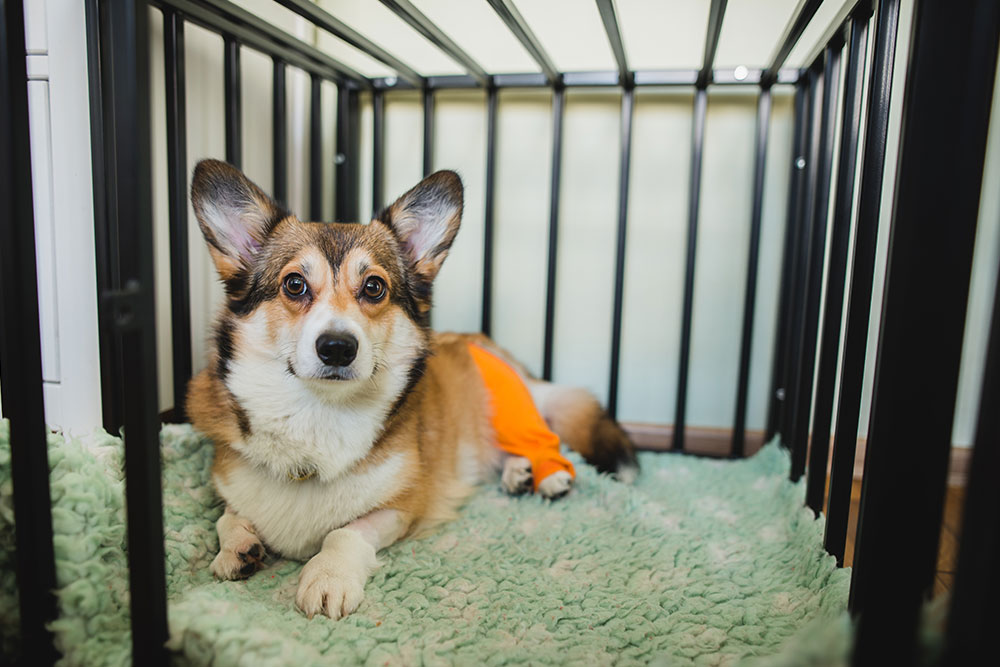
- Crate or pen confinement when unsupervised
- Leash-only outdoor access for bathroom breaks, no running or jumping
- No stairs unless absolutely unavoidable and only with assistance
- E-collar maintained to prevent licking at surgical sites
Implant failure from overactivity during early healing frequently requires revision surgery. Holding the activity restriction is far preferable to this outcome.
Managing Crate Rest
Crate rest is genuinely difficult for active dogs. Practical strategies that help:
- Keep the cratein a household activity area so your dog remains part of the household
- Cognitive enrichment toysand food puzzles provide mental engagement without physical exertion
- Enrichment ideasincluding sniff activities and short training sessions provide stimulation in a controlled way
- Short leash walks for sniffingrather than exercise fulfill some instinctual needs within the activity restriction
- Maintain a predictable routine;structure reduces anxiety during confinement
Ask our team about anxiolytic options if confinement anxiety becomes a safety concern for recovery.
Rehabilitation After Healing
Once radiographs confirm adequate healing, structured rehabilitation supports the return to full function. Rehabilitation therapies including controlled leash walking with gradual distance progression, therapeutic exercises targeting muscle rebuilding, hydrotherapy for low-impact strengthening, and laser therapy for ongoing tissue recovery complement the recovery period.
The goal is restoring muscle mass lost during the confinement period alongside the recovered bone structure. Pets who receive structured rehabilitation regain function faster and more completely than those who simply return to unrestricted activity.
Long-Term Outcomes
Most pets recover fully from fractures and return to their normal activities. Outcome factors that influence recovery:
- Fracture type and complexity:simple, stable fractures heal more predictably than comminuted, articular, or contaminated fractures
- Timeliness of treatment:earlier stabilization reduces pain, prevents further soft tissue injury, and often simplifies the repair
- Family compliance with rest:the most common cause of delayed healing and implant failure
- >Concurrent injuries:vehicle accident cases often involve additional soft tissue or organ injuries that complicate recovery
Implants are left in place permanently in most cases unless they cause problems. Late complications including implant infection or arthritis developing at the fracture site are monitored for at recheck appointments.
Frequently Asked Questions
My pet broke a bone but seems to be coping. Can this wait until tomorrow?
No. An untreated fracture is a source of constant significant pain, risks further displacement and soft tissue injury, and in open fractures, infection risk increases rapidly with time. Fractures should be evaluated the same day they occur.
How long before my pet will be walking normally?
It depends on fracture type and treatment method. Most pets begin bearing weight on the affected limb within two to four weeks of surgical repair; full function is typically restored by 12 to 16 weeks. External fixation cases may have a longer timeline depending on fracture healing progress.
Will my pet need rehabilitation?
Formal rehabilitation is recommended for complex fractures and those involving significant muscle loss during confinement. For straightforward fractures with uncomplicated healing, a home exercise protocol provided at discharge may be sufficient.
What does fracture care typically cost?
Costs vary substantially with fracture complexity. Simple casted fractures with rechecks generally fall on the lower end. Surgical repair with internal fixation, including diagnostics, anesthesia, hospitalization, implants, and post-operative imaging, runs significantly higher and depends on the type of fixation required. We provide a written estimate after diagnostic imaging is complete and before any procedure begins.
Getting Your Pet Back on Their Feet
At the Veterinary Emergency and Specialty Center of Northern Arizona, our fractured limbs and orthopedic capabilities include the diagnostic imaging and surgical expertise needed for the full spectrum of fracture cases. Walk in or contact us at 928-779-5522. We are here around the clock all weekend long.



Leave A Comment