

A dislocated hip or elbow in a dog or cat is a true orthopedic emergency, because every hour the joint stays out of place damages the cartilage, stretches the ligaments, and cuts off blood supply to the joint surfaces. Hip luxations happen when the ball of the femur pops out of the socket in the pelvis, usually from a fall, a car strike, or a bad landing. Elbow luxations involve the joint where the humerus, radius, and ulna meet, and they often show up after trauma in small dogs and cats or as a congenital problem in young growing puppies. The pet cannot bear weight, the leg looks shortened or rotated at an odd angle, and the pain is severe. Getting the joint reduced quickly, whether by hand under sedation or through surgery, is what protects long-term function.
Trauma and orthopedic injuries make up a large share of what Veterinary Emergency and Specialty Center of Northern Arizona sees around the clock all weekend long in Flagstaff, and a suspected luxation moves to the front of the line the moment a pet walks through our doors. Our team has the CT scanner, digital X-ray, and in-house bloodwork to confirm the dislocation, rule out fractures around the joint, and clear a pet for sedation, and our approach starts with pain control and stabilization the moment the pet arrives. If your dog or cat is holding a leg up, rotating it strangely, or refusing to bear weight after a fall or collision, head straight in and we will start the workup as soon as you arrive.
The Bottom Line
- A dislocated hip or elbow is a genuine orthopedic emergency, and the sooner the joint is put back in place, the better the odds of protecting cartilage, ligaments, and long-term movement.
- The classic signs are sudden refusal to bear weight, a leg that looks shortened or twisted at an odd angle, and obvious pain when the limb is touched or moved.
- Getting the joint reduced fast matters because muscle spasm and swelling set in quickly, and every hour of delay makes a gentle closed reduction less likely to hold.
- Recovery is a full plan, not just the reduction: restricted activity, pain control, rehabilitation, weight management, and sometimes regenerative therapies all work together to rebuild a stable, comfortable joint.
What Is a Hip Luxation in Dogs and Cats, and What Causes It?
A hip luxation is a dislocation of the ball-and-socket joint where the top of the thigh bone meets the pelvis. The head of the femur is forced out of the acetabulum, tearing the round ligament and soft tissue that hold it in place, and it is one of the most common orthopedic emergencies we see after trauma. The usual causes:
- Vehicle strike or fall from height: A single hard impact drives the femoral head out of the socket, and a fall from a window or balcony is a classic cause in cats.
- A hard twisting force: A bad landing or scuffle can wrench the joint out of place.
- Underlying laxity or a shallow socket: A hip with a developmental problem can pop out with less force than a normal one, and this holds true for cats as well as dogs.
The signs tend to arrive all at once: sudden non-weight-bearing lameness, a limb that looks noticeably shorter or rotated compared to the other side, sharp pain when the hip is handled, and reluctance to move. If your pet is holding a back leg up and clearly hurting after a fall or collision, that combination is worth an emergency visit rather than a wait-and-see night at home.
What Is an Elbow Luxation in Dogs and Cats?
An elbow luxation is the displacement of one or more of the elbow bones out of their normal alignment. It usually shows up as sudden forelimb lameness, visible swelling, and a leg held stiffly in an odd, fixed angle. Handling the joint provokes significant pain.
There are two main paths to it. The first is traumatic: a fall, a jump gone wrong, or a car strike drives the joint out of place in one moment, which is the more common story in small dogs and cats. The second is developmental, and in younger dogs the instability is sometimes rooted in elbow dysplasia, a joint abnormality that can be mistaken for a simple traumatic injury.
That overlap is why we look closely rather than assuming. A luxation on top of underlying joint disease is a different problem than a clean traumatic dislocation, and untreated elbow instability has real consequences down the road.
Why Is a Luxation Considered an Orthopedic Emergency?
A luxation is an emergency because the joint keeps deteriorating the entire time it stays out of place, and delay is the single biggest factor working against a good outcome. Early intervention makes a gentle closed reduction far more likely to succeed and lowers the risk of lasting instability and post-traumatic arthritis.
Muscle spasm sets in within hours and clamps the limb into position, and the nearby nerves and blood vessels can get stretched or pinched, threatening the leg’s circulation and sensation. This is the kind of injury where emergency and critical care after a traumatic injury genuinely changes the trajectory.
While you are getting to us, keep your pet calm and still, and do not try to push, pull, or straighten the leg yourself, because manipulating an injured joint worsens the soft tissue damage and causes real pain. Support the body, avoid letting the pet walk on the leg, and transport as smoothly as possible. If your pet seems shocky, pale, or is breathing hard after the accident, our ability to stabilize a pet in distress comes first, before anyone touches the joint.
How Do You Diagnose a Luxation?
Diagnosing a luxation starts with a hands-on orthopedic and neurological exam and is confirmed with imaging, because we need to know not just that the joint is out, but which direction it went, whether anything is fractured, and whether the leg’s nerves and blood supply are intact. The workup runs in a logical order:
- Physical and orthopedic exam: We check sensation, circulation, and exactly how the joint is displaced.
- Radiographs: These films confirm the injury, pin down the direction, and reveal concurrent fractures or underlying joint disease.
- Bloodwork: Our in-house lab evaluates overall health and organ function so we can safely clear your pet for sedation or anesthesia.
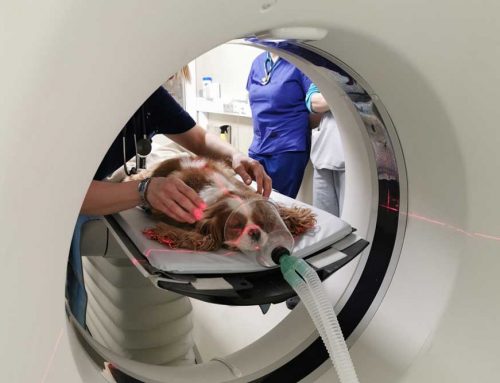
- CT imaging: When the anatomy is complicated or a fracture is subtle, our CT scanner shows the joint in far more detail than plain films.
Finding what else is going on matters as much as confirming the dislocation. Imaging frequently uncovers concurrent joint disease that contributed to the injury, and what those pictures show goes a long way toward shaping the treatment plan and its timing.
What Are the Treatment Options for a Hip Luxation?
Treatment for a hip luxation ranges from a hands-on closed reduction under sedation to several surgical options, and the right choice depends on how quickly you got in, how healthy the surrounding soft tissue is, and whether underlying joint disease is part of the picture.
Closed reduction is the first-line approach for a recent hip luxation with no fractures and no severe soft tissue damage: the femoral head is guided back into the socket by hand under sedation, and most pets go home in a sling for several days while the torn tissue heals. It is less invasive, but there is a meaningful rate of re-luxation, and success leans on how intact those structures are and how soon after the injury it happened.
Surgery becomes the plan when the first attempt fails, when the hip re-luxates, or when underlying joint disease makes a non-surgical fix unlikely to last. The best fit depends on the joint’s condition and your pet’s size, age, and activity level:
- Toggle rod or suture-based stabilization: Reconstructs the torn ligament’s support.
- Femoral head and neck ostectomy (FHO): Lets the body form a comfortable false joint, especially in smaller dogs and cats.
- Total hip replacement: Rebuilds the hip with an implant in the right candidates.
When imaging reveals underlying hip dysplasia driving the instability, that developmental problem needs to be addressed in its own right, and we can point you toward the right specialist for those procedures. Whatever route the joint calls for, surgery rides on careful anesthesia and a solid pain-management plan. If your pet needs surgical stabilization and you want to talk through the options, reach out right away.
How Are Elbow Luxations Treated?
Elbow luxations are treated first with prompt reduction under anesthesia when the injury is recent, and with surgical stabilization when the joint is congenitally unstable, when closed reduction fails, or when there is an underlying structural problem. For a fresh traumatic luxation, the preferred first move is to ease the bones back into alignment under general anesthesia while the muscles are relaxed, then support the joint with a splint or bandage and monitor closely for re-luxation in the first days and weeks.
The important nuance is that an elbow luxation tied to developmental joint disease is not a one-and-done fix: the underlying joint pathology has to be addressed alongside the dislocation, or the instability simply returns. This is why the diagnostic imaging matters so much before treatment begins.
What Does Non-Surgical Management and Recovery Support Look Like?
Non-surgical recovery care is the scaffolding that supports healing after either a closed reduction or surgery. It centers on rest, pain control, joint support, and a slow, supervised return to normal life, with progress guided by recheck exams rather than by how good your pet seems to feel on any given day.
Restricted, controlled activity keeps the joint from being stressed before the soft tissue is ready, anti-inflammatory medication manages pain and swelling, and activity is reintroduced gradually. Alongside that, joint supplements can help protect cartilage health as the joint settles into recovery.
Structured rehabilitation is where a lot of the long-term function is won. A gradual return to full activity goes more smoothly with veterinary physical rehabilitation, which rebuilds strength and range of motion under guidance. If your pet needs that ongoing support, our team can help you find the right rehab facility and coordinate a plan that fits your pet’s injury and pace of healing.
How Do You Protect Long-Term Joint Health and Prevent Re-Luxation?
Preventing re-luxation comes down to controlling activity during healing, reducing strain at home, and keeping up with rechecks, because a joint that has dislocated once is more vulnerable to doing it again. A few practical measures make the biggest difference:
- Leash walks over free-for-all play: Skip unsupervised rough play or rowdy dog-park sessions while the joint is at its most fragile, and keep cats indoors and off high perches during recovery.
- Ramps and steps: Use ramps or steps for the car and the couch to cut down on the jumping and hard landings that stress a healing joint.
- Regular rechecks: See your vet for scheduled follow-ups to catch re-luxation or developing arthritis early.
- Lean and active for life: Maintain a lean body condition and steady, appropriate exercise to keep the surrounding muscle strong and supportive.
Pets with underlying joint laxity or conformational risk factors benefit from ongoing monitoring as part of their routine wellness care, since those joints stay a step more vulnerable even after they heal. Part of prevention also happens in the car and at the front door: careful handling and smooth transport mean a re-injury does not turn into a worse one before you reach us.
Frequently Asked Questions About Luxations in Pets
Can a dislocated hip or elbow heal on its own without treatment?
A luxated joint will not correct itself, and waiting it out causes real harm. The longer the joint stays out of place, the more the cartilage wears, the more the surrounding soft tissue and blood supply suffer, and the more likely your pet is to develop chronic instability and painful arthritis. Muscle spasm also sets in quickly and makes a gentle closed reduction much harder. The best outcomes come from prompt evaluation and getting the joint back where it belongs as soon as possible.
Is my pet in a lot of pain with a luxation?
A dislocated hip or elbow is significantly painful, even if your pet is being stoic about it. Dogs and cats often hide pain, so a quiet pet is not a comfortable one. Refusing to bear weight, holding the leg at an odd angle, trembling, panting, or flinching when the area is touched are all signs of serious discomfort. Pain control is one of the first things we address when your pet arrives, well before any reduction or imaging.
What should I do on the way to you?
Keep your pet calm and as still as possible, and do not try to manipulate, straighten, or push the leg back into place yourself, since that can worsen the injury and cause severe pain. Support the body during transport, avoid letting your pet walk on the injured leg, and drive as smoothly as you can. If your pet seems shocky or is struggling to breathe after a trauma, that becomes the priority, so let us know right away so we can be ready the moment you arrive.
Fast Care When It Matters Most
Hip and elbow luxations are exactly the kind of injury where getting seen early changes everything, both for a smooth reduction now and for a stable, comfortable joint years down the road. These moments are frightening, and watching your pet abruptly unable to use a leg is genuinely scary, but calling us right away is always the right move when your pet goes suddenly lame or is clearly in pain.
If your dog or cat is holding a leg up, standing on three legs, or hurting after a fall or collision, do not wait it out. Our team provides emergency and orthopedic care around the clock on weekends, and we will start the workup as soon as you arrive. Call us the moment your pet is suddenly lame, and we will take it from there, at your side through the reduction and the recovery that follows.



Leave A Comment