

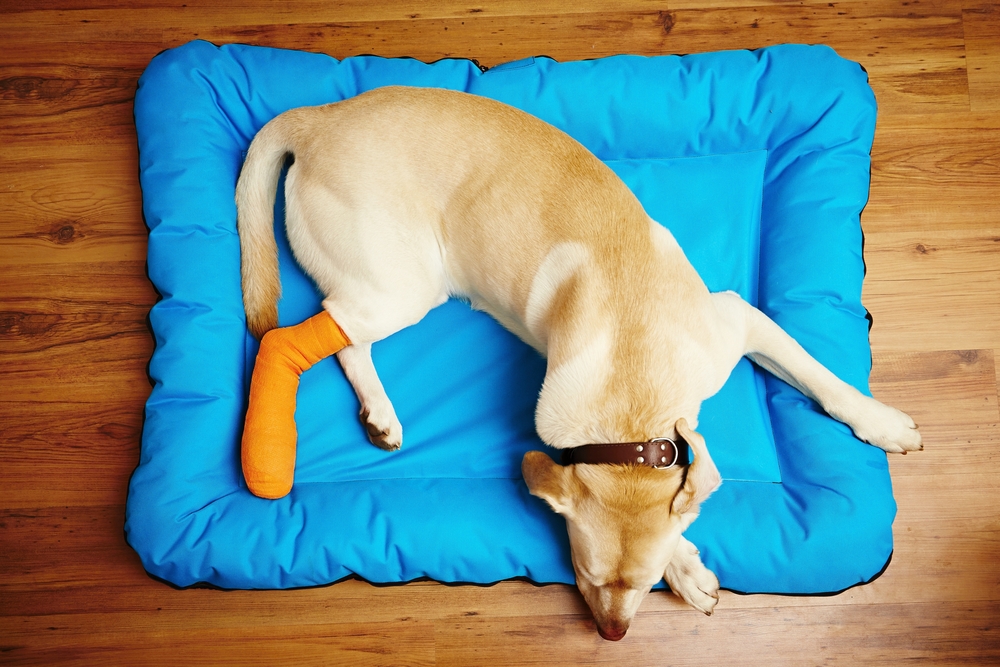
One minute your dog is tearing across the trail after a squirrel, and the next they’re hobbling back on three legs with a hind paw held off the ground. A sudden hind-leg limp like that is very often a torn cranial cruciate ligament, the dog version of a blown ACL and one of the most common orthopedic injuries we see. The CCL stabilizes the knee, so when it tears, the joint shifts with every step. The limp either shows up all at once after a hard run or comes and goes for weeks as a partial tear slowly worsens. A torn CCL won’t quietly heal with rest, because the knee can’t restabilize on its own. But a limp can also be a dozen other things, from a cactus spine wedged between the toes to a sprain or a fracture, which is exactly why a sudden limp deserves a real look rather than a wait-and-see weekend.
When a Saturday hike or a backyard playdate ends in a limp, you usually can’t get in with your regular veterinarian until Monday at the earliest, and that’s where we come in. Veterinary Emergency and Specialty Center of Northern Arizona is open when other clinics are closed, and our emergency care for dogs in Northern Arizona can sort out what’s causing the limp, get your dog comfortable, and tell you what the next step looks like. If your dog is limping badly or won’t put weight on a leg, reach out to us and come in so we can take a look.
What to Know About a Sudden Limp
- A sudden or recurring hind-leg limp is one of the most common signs of a torn CCL in dogs, but it can also point to paw injuries, sprains, fractures, or a snake bite.
- A torn CCL won’t heal with rest, because the knee can’t restabilize on its own, so it eventually needs surgical repair through your regular veterinarian.
- When an injury happens on a weekend or after hours, our role is to diagnose the cause, control your dog’s pain, and bridge the gap until your family vet can take over the repair.
- A dog who suddenly can’t bear weight is in real pain and is worth having seen promptly rather than waiting out the weekend.
What Does a Torn CCL Look Like in a Dog?
A torn CCL usually shows up as a hind-leg limp that either appears suddenly after hard activity or comes and goes for weeks. Many dogs hold the leg up, sit with it kicked out to the side, struggle with stairs, or stiffen after exercise. Swelling at the knee is common, and the limp tends to worsen over time rather than fade.
A complete tear often happens in an instant, sometimes from a traumatic incident: a quick turn when playing fetch, falling off a rock on the trail, or being hit by a car. A partial tear is sneakier. It produces an intermittent limp that eases with rest and flares with activity, which is easy to brush off as a mild sprain until it gets worse.
A few other clues tend to travel with CCL trouble:
- Sitting off-center: dogs often sit with the sore leg kicked out to the side instead of tucked underneath.
- Hesitation at height: pausing before stairs, jumping onto the couch, or hopping into the car.
- Post-exercise stiffness: looking fine during play, then stiffening up an hour or two later.
- Visible swelling: puffiness or thickening around the knee joint.
Cruciate ligament injury in dogs usually reflects a ligament that has been quietly degenerating over time rather than one freak misstep, which is why so many dogs have a history of mild, on-and-off lameness before the obvious limp arrives. Catching it during that earlier, subtler phase genuinely changes the outlook.
Could the Limp Be Something Other Than a CCL?
Plenty of things cause a sudden hind-leg limp, and not all of them involve the knee. Paw injuries, cactus spines, torn nails, soft-tissue sprains, fractures, insect stings, and snake bites can all look like a CCL tear from across the room. Telling them apart is the whole reason a limping dog needs a hands-on exam rather than a guess.
Northern Arizona’s trails, rocks, and wildlife give dogs plenty of creative ways to come up lame. Some of the more common culprits we check for:
- Paw and pad injuries: cuts, cracked pads, or burns from hot summer ground and sun-baked rock.
- Cactus spines, cholla, and foxtails: lodged between the toes or in the webbing, where they’re easy to miss and painful with every step.
- A torn or broken nail: small, but enough to make a dog refuse to bear weight.
- Sprains and strains: stretched or partially torn muscles and tendons from an awkward landing on rough terrain.
- Fractures: a slip on loose rock or a fall on a steep trail can crack a bone.
- Insect stings and snake bites: a rattlesnake strike or a bee sting on a paw brings sudden swelling and pain.
- A slipping kneecap: a luxating patella can cause a skip-step limp, especially in smaller dogs.
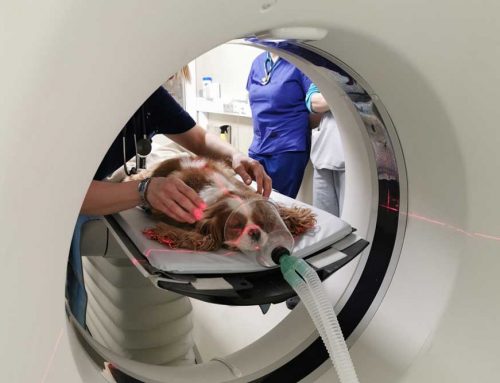
The tricky part is that several of these look identical to a torn cruciate from a distance. A dog holding up a hind leg could have a wedged foxtail or a blown CCL, and the right response is completely different for each. That’s why we don’t just rest a limping dog and hope. We look. VESCONA has Northern Arizona’s only CT for dogs, meaning we can do more than just take an X-ray. Our CT gives us the ability to pinpoint subtle fractures, bone tumors, joint disorders, and find migrating foreign bodies like foxtails and cactus spines.
How Do We Figure Out What’s Wrong With a Limping Dog?
We start with a hands-on orthopedic exam, feeling the knee for the telltale instability of a torn CCL and checking the paws, nails, and soft tissues for anything else. Depending on what we find, X-rays help us rule out fractures and assess the joint. The goal of the visit is a clear cause, real pain relief, and a plan you can act on.
- Examine the whole leg by hand. The classic CCL finding is the cranial drawer sign, an abnormal forward slide of the shin bone against the thigh bone that signals an unstable knee. A tense or sore dog sometimes needs light sedation for an accurate test, which also lets us check between the toes and pads thoroughly.
- Take radiographs when needed. X-rays reveal fractures, show how much arthritis has already built up, and help rule out other bony causes of the limp. They’re a fast, painless way to narrow things down.
- Advanced imaging for complicated cases. Once in a while a knee injury needs detailed imaging like an MRI to evaluate structures such as the meniscus, which is done at facilities with that specialized equipment, usually by referral. If a CT is needed, we can do that right at our hospital.
- Get the pain under control. Once we know what we’re dealing with, comfort comes first, before your dog heads home to wait for the next step.
The point of the emergency visit isn’t to perform the repair. It’s to figure out why your dog is limping, rule out the injuries that need attention tonight, and make sure your dog isn’t toughing out pain over a long weekend.
What Do We Do for the Pain While You Wait to See Your Regular Vet?
When a torn CCL or another painful injury can’t be fully fixed until your family vet is open, our job is to bridge that gap. That means appropriate pain medication, clear instructions for rest and activity restriction at home, and sharing our exam findings and X-rays so your regular veterinarian or an orthopedic surgeon can pick up right where we left off.
A torn cruciate eventually needs your regular veterinarian’s plan, but the days in between shouldn’t be miserable. We’ll send you home with pain control suited to your dog along with a realistic activity plan, which usually means strict rest. For many dogs that looks like crate rest with short, leash-only bathroom breaks and no stairs, jumping, or zoomies until the knee has been properly evaluated. Keeping an unstable knee quiet protects it from further damage in the meantime.
We also make the handoff easy. Records, images, and our notes go straight to your family veterinarian, so you’re not starting from scratch at Monday’s appointment. If you’re unsure how to keep your dog comfortable or whether something has changed overnight, chat with our team and we’ll talk it through.
Should You Wait Out the Weekend, or Come in Now?
A sudden, severe limp is worth checking promptly rather than hoping it clears by Monday. A torn CCL is rarely life-threatening the way bloat or a car accident is, but a dog who can’t bear weight is in genuine pain, and an unstable knee keeps grinding toward further damage the longer it goes untreated. Pain relief alone is reason enough not to make your dog wait.
| Come in now | Usually okay to schedule with your vet soon |
| Holding the leg up, crying, or unable to settle | Mild limp, otherwise bright and comfortable |
| Visible swelling, an open wound, or a dangling paw | Slight stiffness that improves with rest |
| A possible snake bite or fast-spreading swelling | A nail that looks chipped but isn’t bleeding much |
| A limp right after a hard fall on the trail | Subtle, on-and-off lameness over weeks |
The other reason not to sit on it: an untreated, unstable knee keeps progressing toward arthritis and raises the risk of a secondary tear of the meniscus, the cushion inside the joint. If your dog is holding the leg up or clearly hurting, our weekend emergency evaluation can assess and stabilize the knee right away. If the limp is mild and your dog seems comfortable, resting them and calling your primary veterinarian promptly is a reasonable plan.
What Happens After the Emergency Visit? The Road to a Repaired Knee
For most medium, large, and giant dogs, a torn CCL ultimately needs surgery to restore a stable, comfortable knee, and that repair is handled by your regular veterinarian or a surgeon they refer you to. Our part is getting you an accurate picture and a comfortable dog so that next conversation starts from solid ground.
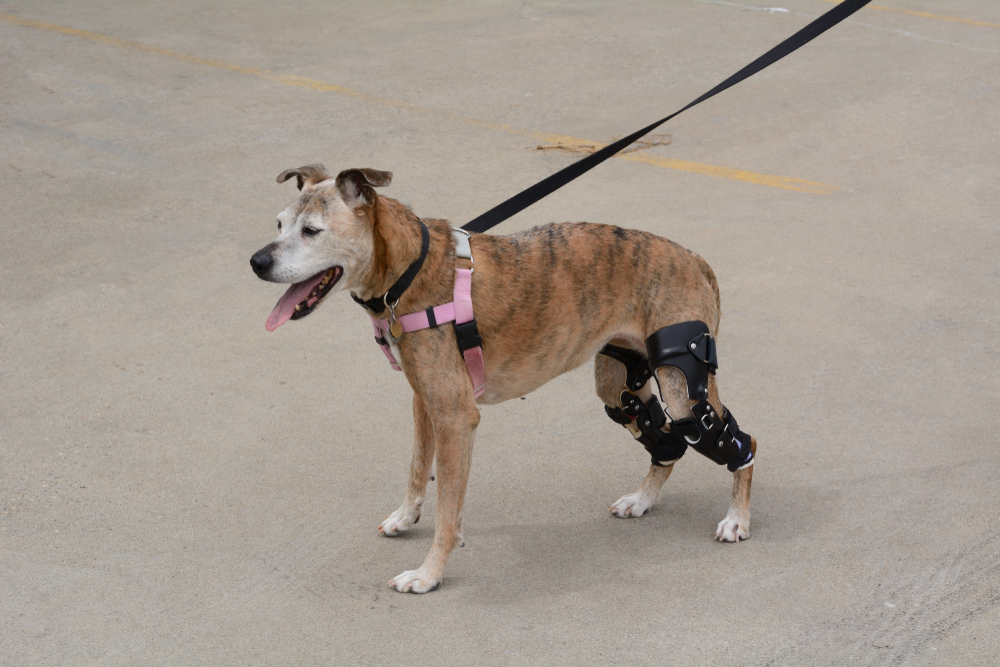
Your veterinarian will talk through the options that fit your dog’s size and activity level. The two most common are TPLO (tibial plateau leveling osteotomy), which reshapes the top of the shin bone so the knee no longer depends on the torn ligament, and extracapsular repair, which supports the joint from the outside with a heavy suture and is often a good fit for smaller, less active dogs. Very small dogs are occasionally managed without surgery, but for most medium and large breeds, surgical repair gives the best long-term function and slows arthritis more effectively than rest alone.
Recovery is a staged process over roughly three to four months, starting with strict rest and gradually building back to controlled activity. Structured rehabilitation speeds healing and improves the final result. Over the long haul, weight control and sensible warm-ups and cooldowns protect both knees, which matters because a dog who tears one CCL has a real chance of tearing the other.
Frequently Asked Questions About Sudden Limps and CCL Injuries
My Dog Hurt His Leg on Saturday. Should I Wait Until Monday?
If your dog is non-weight-bearing, crying, or clearly in pain, don’t wait. There’s no reason to leave a dog hurting for two or three days, and we can assess the leg, control the pain, and point you toward the right next step. If the limp is mild and your dog is otherwise comfortable, resting them and scheduling with your primary veterinarian promptly is reasonable. When you’re not sure which situation you’re in, a quick phone call helps you decide.
Do You Do the CCL Surgery at Your Hospital?
The surgical repair itself is handled by your regular veterinarian or a board-certified surgeon they refer you to. Where we come in is the part that can’t wait: evaluating a sudden limp after hours, ruling out other causes, confirming what’s going on, and getting your dog out of pain so the days before that appointment aren’t spent suffering.
My Dog Is Limping but Still Eating and Playing. Is It Still Urgent?
A dog who’s bright and only mildly lame can often wait a day or two for their regular vet, as long as you keep activity restricted in the meantime. What changes the math is a leg held completely off the ground, obvious swelling, an open wound, or a dog who can’t get comfortable. Those are worth same-day attention.
Can My Dog Tear the Other CCL?
It’s a real risk. Many dogs who tear one CCL go on to tear the opposite knee within a year or two, partly because that leg carried extra weight during recovery. Keeping your dog lean and conditioning steadily lowers the odds.
Will My Dog Get Arthritis Even With Surgery?
Usually some arthritis is already present by the time of surgery, because the joint was unstable beforehand. Surgery dramatically slows the progression compared with leaving the tear alone, though it can’t undo existing damage. Most surgically treated dogs do well for years, with some needing ongoing joint support as they age.
When a Weekend Injury Can’t Wait, We’re Here
A hind-leg limp that appears out of nowhere or keeps creeping back is worrying for any dog’s family, and you shouldn’t have to guess at the cause or watch your dog hurt until your vet reopens. Whether it turns out to be a torn CCL, a wedged cactus spine, or something in between, an accurate diagnosis and real pain relief come first.
When a hike, a romp, or a hard landing leaves your dog limping after hours, Veterinary Emergency and Specialty Center of Northern Arizona is ready to step in, sort it out, and get your dog comfortable. Get in touch to chat with our team with any worry about a painful leg.



Leave A Comment