

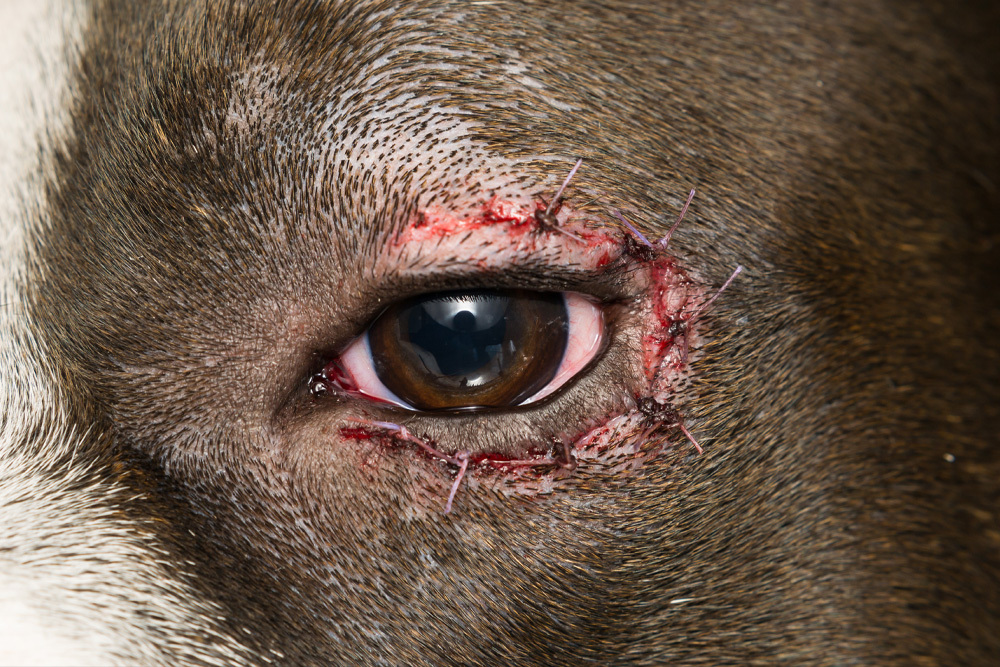
A red, swollen, or squinting eye in your dog almost always deserves same-day veterinary attention, and in some cases it’s a true emergency where hours matter. Eye problems in dogs move fast: a corneal ulcer can deepen overnight, and glaucoma, where pressure inside the eye spikes rapidly, can cause permanent vision loss within hours if it isn’t treated. Even conditions that look like simple irritation can turn out to require urgent intervention, because dog eyes don’t give you many obvious clues to distinguish a minor scratch from a sight-threatening emergency. That’s why the threshold for being seen should be low.
The Veterinary Emergency and Specialty Center of Northern Arizona in Flagstaff is open every weekend, from Friday at 5pm through Monday at 8am, providing emergency and critical care when most clinics are closed. We can assess a painful or injured eye, get pain under control, and determine how urgent the situation is. If your dog’s eye looks wrong and it is a weekend, do not wait. Call us or come straight in.
Pet Eye Emergencies: Key Points
- Some eye problems lose vision in hours: acute glaucoma, eye proptosis, and deep corneal ulcers can cause permanent vision loss within hours, so same-day evaluation is essential.
- Foxtails are a local hazard: grass awns lodged behind the eyelid are common Northern Arizona issues, especially in dogs that hike.
- Flat-faced breeds are higher-risk: brachycephalic breeds (Bulldogs, Pugs, Boston Terriers, Frenchies) have a higher rate of proptosis (the eye popping out of the socket) from even minor head trauma.
- When the eye looks wrong, treat it as urgent: eye conditions rarely get better with watching.
How Do I Know if My Dog’s Eye Is an Emergency?
Pets communicate eye discomfort through behavior rather than words, so swift action prevents permanent damage. These are the warning signs that warrant immediate veterinary attention:
- Redness or visible swelling
- Squinting or excessive blinking
- Pawing or rubbing at the face
- Abnormal discharge: especially thick, yellow, green, or bloody
- Cloudiness or color changes in the eye
- An eye that appears larger than the other (bulging)
- An eye that appears smaller or sunken
- Sudden blindness or disorientation
- Visible trauma or a foreign object
- Severe pain: vocalization, lethargy, refusing food
Trust your instincts. If something looks wrong, it usually is. Home remedies (rinses, drops from a previous prescription, human eye drops) often delay proper care without helping. Get the eye evaluated.
Which Eye Conditions Send Dogs to the ER?
A range of eye problems show up in general practice and emergency care, but they are not all equally urgent. The single most useful question is how fast you need to act, because the same red eye could be a minor irritation or a sight-threatening emergency. This is how the common conditions sort by urgency:
| Eye problem | How fast to act | Why it matters |
| Proptosis (eye out of the socket) | Right now | The eye and its vision are lost within minutes to hours; cover with a moist cloth and come in |
| Acute glaucoma | Within hours | Rising pressure causes permanent blindness in 24 to 72 hours, sometimes faster |
| Anterior lens luxation | Within hours | Intensely painful and can trigger acute glaucoma |
| Deep corneal ulcer or foxtail in the eye | Same day | Can perforate the cornea within days; foxtails drive deeper without removal |
| Sudden blindness (SARDS, hypertensive retinopathy) | Same day | Time-sensitive workup; some underlying causes are treatable if caught early |
| Uveitis (inflammation inside the eye) | Same day | Painful and vision-threatening, and often a sign of systemic disease that needs a workup |
| Hyphema (blood in the front of the eye) | Same day | Vision-threatening and often a sign of high blood pressure, a bleeding disorder, or trauma that needs a workup |
| Conjunctivitis, cherry eye, mild dry eye, pannus | Prompt but schedulable | Need treatment and a plan but rarely threaten vision within hours |
Proptosis (Eye Out of the Socket)
Ocular proptosis is when the eyeball is pushed forward out of its socket, with the eyelids trapped behind it, and it is one of the most urgent eye emergencies there is. Every minute counts, because the displaced eye dries out and loses its blood supply quickly. It usually follows trauma, like a bite to the face in a dog fight, being hit by a car, or a hard knock to the head. Flat-faced breeds such as Pugs, Shih Tzus, Pekingese, Bostons, and Bulldogs have shallow eye sockets, so proptosis can happen with surprisingly little force, even rough restraint. In long-nosed breeds it takes much more severe trauma, which usually means more damage and a more guarded outlook.
While you head in, a few things help:
- Keep the eye moist with a clean cloth dampened with saline or water, or a sterile lubricating gel if you have one.
- Do not try to push the eye back in, which can cause more damage.
- Stop your dog from pawing or rubbing at the eye.
- Come straight in, since speed strongly affects the outcome.
Proptosis almost always needs emergency surgery under anesthesia to reposition the eye and temporarily stitch the eyelids closed to protect and hold it in place. When the eye is too damaged to save, removal (enucleation) is the kindest option. Vision is often lost even when the eye itself is saved, so the goal is sometimes to keep the eye comfortable and intact for appearance rather than for sight.
Conjunctivitis
Conjunctivitis is inflammation of the conjunctiva (the tissue lining the eyelids and covering the white of the eye). Causes include allergy, bacterial or viral infection, irritants, and a knock-on effect from other eye problems. Signs include redness, swelling, discharge, and squinting. Most cases improve quickly with appropriate treatment, but identifying the underlying cause matters because allergic reactions, infection, and irritant exposure all need different management.
Corneal Ulcers
Corneal ulcers are open sores on the cornea, the clear surface of the eye. Common causes include trauma (a cat scratch, a branch in the face), dry eye, foreign bodies, infections, and self-trauma from rubbing.
Signs include squinting, increased tearing, holding the eye closed, sensitivity to light, and sometimes a visible defect on the eye surface. Diagnosis uses fluorescein stain, which turns green where the cornea is damaged.
Treatment depends on depth. Superficial ulcers typically heal with antibiotic eye drops over 7 to 10 days. Deeper ulcers can require more intensive care or surgical referral. Untreated ulcers can deepen, perforate the cornea, and cause permanent vision loss within days, which is why rapid treatment prevents scarring and vision loss.
Foxtails, Foreign Bodies, and Environmental Risks
Foxtails are a serious concern in Northern Arizona. These barbed grass awns travel one direction only (forward) and can embed in the eye, behind the eyelid, in the ear canal, between the toes, or up the nose. An eye foxtail can cause rapid corneal ulceration if not removed promptly.
Signs of an ocular foreign body include sudden squinting, excessive tearing, repeated pawing at one eye, and visible irritation. Removal requires veterinary equipment, magnification, and often sedation. Do not attempt removal at home; the barbed structure means well-intentioned attempts can drive the foxtail deeper.
For Flagstaff-area dogs that hike, run, or play in tall grass, post-activity face and eye checks catch foxtails before they cause significant damage.
Glaucoma Emergencies
Glaucoma is increased pressure inside the eye, and it is a true emergency. Untreated acute glaucoma can cause permanent blindness within hours.
Signs include redness, cloudiness (the eye may look bluish or hazy), enlargement of the eye, pain (squinting, pawing at the face, lethargy), and sometimes a dilated pupil. Diagnosis requires measurement of intraocular pressure using tonometry. Treatment is medical (drops to lower pressure) and sometimes surgical, depending on the cause and severity.
Certain breeds (Cocker Spaniels, Basset Hounds, Bostons, Beagles) are predisposed. If you suspect glaucoma, do not wait; this is exactly the kind of weekend emergency that brings dogs to us in Flagstaff.
Uveitis and Its Many Causes
Uveitis is inflammation inside the eye, affecting the uvea (the iris and the structures behind it), and it is painful, vision-threatening, and frequently a window into disease elsewhere in the body. Signs include a red, painful eye, squinting, a hazy or cloudy look, a constricted (small) pupil, tearing, light sensitivity, and sometimes visible blood or pus in the front of the eye. What makes uveitis tricky is the long list of things that can cause it:
- Trauma and corneal ulcers: a blow to the eye or a deep ulcer can set off reflex inflammation inside the eye.
- Infections in dogs: systemic infections are a major driver, and here in Northern Arizona Valley Fever, a fungal infection also called coccidioidomycosis, is an important local cause, alongside tick-borne diseases and other fungal infections.
- Infections in cats: feline herpesvirus, along with feline leukemia virus, FIV, FIP, and toxoplasmosis, are common feline causes.
- Immune-mediated disease: the immune system can mistakenly target the eye, sometimes alongside skin or other organ involvement.
- Cancer: tumors within the eye or spreading to it, such as lymphoma, can show up as uveitis.
- Metabolic and lens-related causes: diabetes, high blood pressure, and leakage from a cataract or a ruptured lens can all inflame the eye.
- Idiopathic: in some cases no cause is found despite a thorough search.
Because uveitis is both painful and a possible signal of illness elsewhere, it needs same-day evaluation and often a broader workup beyond the eye itself.
Hyphema (Blood in the Eye)
Hyphema is blood pooling in the front chamber of the eye, the space between the clear cornea and the iris, and it can range from a faint red tinge to blood that fills and hides the whole eye. It always deserves prompt attention, both because it threatens vision and because, much like uveitis, it is often the first visible clue to a problem somewhere else in the body.
The causes span a wide range:
- Trauma: a blow to the head or eye, a car accident, or a fight is the most common cause.
- High blood pressure: hypertension from kidney disease, heart disease, or hyperthyroidism in cats can cause bleeding into the eye.
- Bleeding and clotting disorders: anything that interferes with normal clotting can show up as blood in the eye, including low platelets, inherited clotting problems, and rodenticide (rat poison) toxicity. If there is any chance your dog got into rat poison, tell us right away, because that is a life-threatening emergency that reaches well beyond the eye.
- Eye disease and tumors: severe uveitis, retinal detachment, glaucoma, and tumors inside the eye can all bleed.
Because hyphema so often points back to a systemic cause, the workup usually looks past the eye, with blood pressure measurement, clotting tests, and a careful history of any possible toxin exposure. We treat the eye and the underlying problem together.
Lens Luxation
Lens luxation is dislocation of the lens from its normal position, either forward (anterior, which is a true emergency) or backward (posterior, less acute). Anterior lens luxation can cause acute glaucoma and is intensely painful. Surgical intervention is often recommended to preserve vision or relieve pain.
Certain breeds (Jack Russell Terriers, several other terriers) have an inherited predisposition. A sudden change in eye appearance with pain in a predisposed breed warrants emergency evaluation.
Sudden Vision Loss and Endocrine-Related Eye Disease
Systemic conditions also affect eye health, and can cause anything from uveitis to blindness. Any sudden change to your pet’s ability to see deserves an emergency visit and full evaluation.
SARDS (Sudden Acquired Retinal Degeneration Syndrome) causes acute blindness, often within days, in middle-aged to older dogs. The cause remains incompletely understood, and vision loss is usually irreversible by the time the diagnosis is made.
Diabetes-related cataracts are common in diabetic dogs, often forming rapidly. A dog who develops cataracts suddenly should be screened promptly; sudden bilateral cataracts in a previously healthy dog often turn out to be the first sign of diabetes mellitus. Sudden cataracts can also be caused from electric shock, which comes with its own emergency needs.
High blood pressure damages the retina, sometimes causing sudden vision loss. Hypertensive retinopathy is often associated with underlying kidney disease, hyperthyroidism (in cats), or heart disease. Sudden blindness is always an emergency; the underlying systemic disease then becomes the management focus once acute changes are addressed.
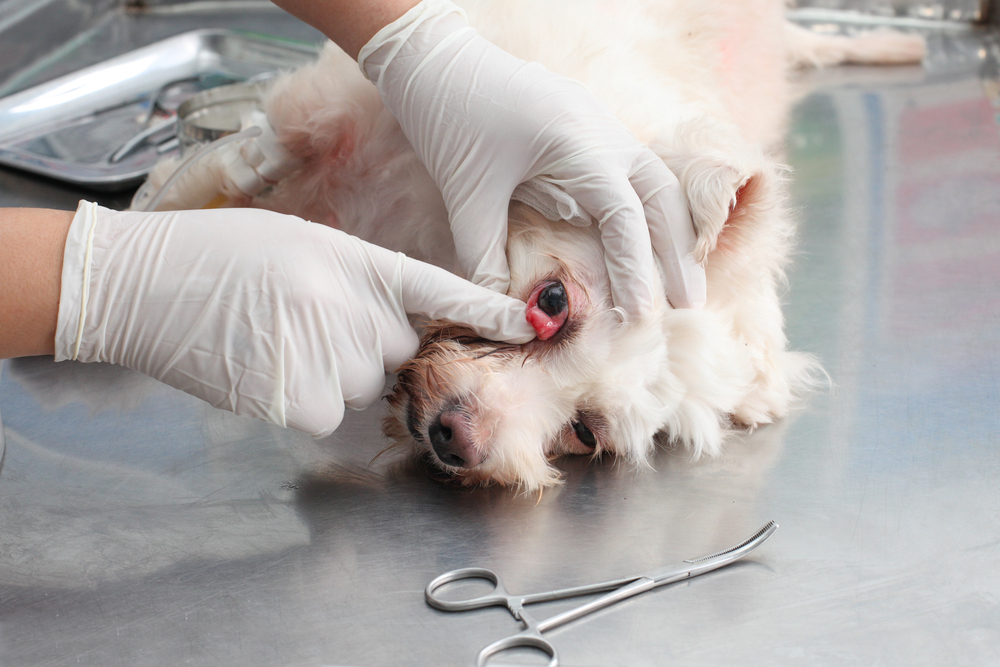
When Should I Seek Emergency Care for My Dog’s Eye?
Skip the wait-and-see and come straight in for:
- Severe pain or discomfort: vocalization, refusing food, lethargy.
- Sudden vision loss.
- Significant swelling or bleeding around the eye.
- Blood visible inside the eye.
- Persistent redness or discharge that does not respond to simple care.
- An eye that appears suddenly larger or smaller.
- A visible foreign object you cannot easily flush away.
- Trauma to the head or eye area.
- Eye protrusion (proptosis): the eye has come forward out of the socket; cover with a moist cloth and come immediately.
For Flagstaff-area pets needing weekend emergency evaluation, we are open Friday at 5pm through Monday at 8am. We handle the full range of eye injuries and emergencies, including those from trauma, electric shock, allergic reactions, toxins, and more.
Proactive Eye Care for Your Pet
Attentive observation and prompt treatment protect vision and comfort. Eye conditions move quickly, and the difference between full recovery and permanent vision loss is often a matter of hours. Trust your instincts when something looks wrong, and do not wait through a weekend hoping a problem resolves itself.
If your dog’s eye looks red, swollen, painful, or otherwise wrong, contact us immediately. Our team is ready to evaluate, manage pain, and determine the urgency of the situation.




Leave A Comment